When President Trump released his America First Investment Policy, the document made clear that welcoming investment and strengthening America’s capital markets would be central to economic growth.
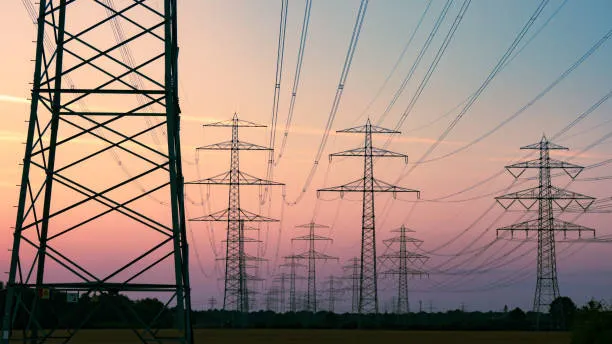
His data center infrastructure order has since followed the same logic, targeting the rapid development of transmission lines, natural gas infrastructure, substations, and new power generation needed to support America’s AI expansion.
This is supply-side economics working as intended.
Government removes unnecessary barriers and creates an environment where private businesses have an incentive to invest.
Unfortunately, progressive groups that call themselves consumer advocates have adopted a different model: block the investment, slow the progress, and dress obstruction up as protection.
This has come to the detriment of America’s ratepayers.
Regulators Must Clear the Way for New Investment as Demand Increases
America’s electricity system was built during an era of relatively stagnant demand. That era is over. Between 2005 and 2019, electricity demand increased only about 0.1% annually.
Between 2020 and 2025, the rate jumped to roughly 1.7% annually, with data centers helping drive the acceleration, and is expected to continue rising in the coming years. Demand is expected to keep rising.
Artificial intelligence requires extraordinary amounts of electricity. So does the domestic manufacturing base Trump is rebuilding. Private infrastructure funds, pension funds, utilities, and institutional investors control trillions of dollars of capital are looking for exactly this kind of long-duration investment.
That alignment of need and capital is a genuine opportunity — unless regulators are pressured into treating every private investor as a threat.
FERC Is Helping Remove the Bottlenecks
The Federal Energy Regulatory Commission (FERC) has a real job to protect competition, ensure electricity rates remain just and reasonable, and determine whether transactions subject to federal review are consistent with the public interest.
FERC’s job is not to treat private capital as inherently suspect. Recently, the Commission has said as much.
In late May, FERC authorized Blackstone Infrastructure’s acquisition of TXNM Energy, concluding that the transaction was consistent with the public interest and finding no evidence of adverse effects on rates or competition.
FERC has also approved Southwest Power Pool’s new consolidated transmission and interconnection process.
Commissioner David Rosner said in his concurrence the reform would “get transmission built smarter and connect new generation faster.”
Progressive advocacy groups have routinely opposed most of these types of transactions. Their argument, stripped of its consumer-protection framing, is that private ownership of utilities is itself a problem. That is an ideological position, not a legal or economic one. FERC was right to reject it.
AES Is the Test Case for What Comes Next
The same fight is now playing out over the proposed acquisition of AES Corporation by a consortium led by Global Infrastructure Partners and EQT. AES serves roughly 1.1 million customers through regulated utilities in Indiana and Ohio and is positioned directly in the path of growing power demand from technology companies.
The transaction would bring substantial private capital to expand infrastructure and support demand growth in the years ahead.
Opponents, including Public Citizen, are raising the same alarms FERC already dismissed in the Blackstone-TXNM case. The pattern is familiar: whenever private capital moves toward American energy infrastructure, the same organizations appear to slow it down, using ratepayer protection as the justification.
Regulators should scrutinize utility acquisitions. If a transaction threatens competition, harms customers, weakens a utility financially or shifts inappropriate acquisition costs onto ratepayers, regulators should act. But private capital itself is not evidence of consumer harm. New electricity generation still requires financing.
Making investment harder does not protect consumers. It makes America’s energy challenge more expensive and hands the advantage to competitors abroad who are not slowing down.
The Real Consumer Threat is Falling Behind
President Trump understands the connection between energy and economic growth. Lower-cost, abundant energy combined with private investment can increase productivity, strengthen manufacturing and fuel broader prosperity.
America needs trillions of dollars of new investment to win the global competition for energy, manufacturing and artificial intelligence.
Progressive groups claiming to speak for consumers are, in practice, undermining that investment. FERC should protect consumers and enforce the law. But it should recognize that reflexive opposition to private capital is not consumer protection. It is obstruction dressed up in populist language.
The AES transaction represents exactly the kind of long-term investment deal America needs, and FERC should approve it.
Agree/Disagree with the author(s)? Let them know in the comments below and be heard by 10’s of thousands of CDN readers each day!