
For roughly the past month, President Donald Trump has assured the public that the Iran incursion will end shortly. Americans collectively hope that “shortly” truly means shortly. If this conflict drags on for even a few more weeks, reversing the compounding negative economic and geopolitical outcomes could prove difficult.
The Economic Cost of Conflict
Prior to the start of this conflict, the administration’s America First policies were delivering clear victories. The annual inflation rate had fallen to 2.4%, down from the 2.9% inherited when Trump took office.
Thanks to aggressive supply-side policies aimed at boosting domestic output and slashing regulatory burdens, economists confidently projected that inflation would hit the Federal Reserve’s 2% target by the end of the year.
The outbreak of hostilities in Iran completely disrupted that trajectory.
Almost overnight, global oil prices shot up from below $70 per barrel to well over $100. That energy shock quickly trickled down to American families, pushing regular gasoline from a comfortable sub-$3.00 average to more than $4.50 per gallon.
Because energy costs heavily influence the Consumer Price Index (CPI), the fallout was immediate: after just over two months of war, annual CPI inflation has ticked back up to 3.8%.
The conflict is also acting as a drag on broader economic growth. First-quarter GDP clocked in at 2%. While a 2% growth rate is stable, it falls short of what the Trump economic agenda is designed to achieve.
With core tax cuts and deregulation fully in place, GDP growth should easily exceed 3%, with many analysts previously forecasting annual growth as high as 4% by year-end. If operations in Iran bleed past the end of this month, those optimistic forecasts will inevitably be revised downward.
The reality remains unchanged: the American economy cannot run at peak performance when artificially high energy costs punish consumers and manufacturers alike.
The Flaw of Conventional Logic
The gridlock isn’t due to a lack of military success. Back in March, as American and Israeli forces heavily dismantled Iran’s conventional military capabilities, a swift resolution seemed entirely within reach.
President Trump successfully brokered a partial ceasefire, operating under the logical assumption that the devastating losses incurred by Tehran would force its leadership to the negotiating table to prevent total ruin.
In conventional warfare, leaders act to protect their citizens and preserve their nation’s structural integrity when faced with overwhelming defeat. President Trump assumed Iran’s regime would want to secure a peace deal before its domestic infrastructure was completely decimated.
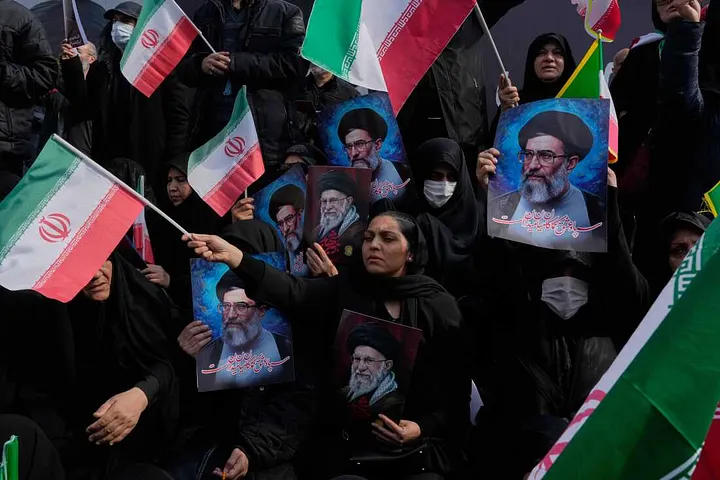
The critical flaw in this equation, however, is that Iran’s theological dictatorship operates outside conventional logic. The regime possesses zero regard for the welfare of its own population. This is, after all, a government that executed more than 30,000 of its own citizens simply for protesting state oppression.
Lessons from Gaza and World War II
We saw this exact asymmetrical dilemma unfold during Israel’s campaign against Hamas in Gaza. Rather than surrendering to spare Palestinian lives, Hamas leaders intentionally embedded themselves inside schools, mosques, and hospitals, using their own civilian population as human shields.
They weaponized the inevitable civilian casualties to win a global public relations war, showing complete disdain for human life.
History shows us how conventional regimes respond to existential leverage. During World War II, the United States faced a fiercely determined Japanese empire. On August 6, 1945, the U.S. deployed the first atomic weapon over Hiroshima.
When Japan did not immediately capitulate, a second, more powerful device was detonated over Nagasaki three days later. Confronted with the complete annihilation of their civilization, Japan’s leadership ultimately prioritized the survival of its people and offered an unconditional surrender.
Iran’s radical leadership will not follow that script. They will not surrender regardless of the damage inflicted upon their infrastructure or their population. To a radical regime, death in conflict isn’t a defeat to be avoided; it is a path to martyrdom and a guaranteed reward in the afterlife.
When dealing with adversaries driven by religious fanaticism rather than national preservation, diplomatic negotiation is a waste of valuable time. It merely allows the conflict to drag on, draining resources and bleeding both the American and global economies.
The mullahs in Tehran are playing a game of attrition, actively hoping they can simply “wait out” American political resolve.
If negotiation is a dead end, the only viable path to concluding this war is the absolute elimination of the Iranian leadership structure and the total neutralization of the infrastructure that sustains them.
The longer the administration hesitates in delivering a decisive, concluding blow, the more severe the structural damage to the American economy will be.
Mr. President, the time for diplomatic patience has passed. It is time to execute a swift, overwhelming victory and end this war now.
Agree/Disagree with the author(s)? Let them know in the comments below and be heard by 10’s of thousands of CDN readers each day!






ABSOLUTELY: it is time to execute a swift, overwhelming victory and end this war now!!!