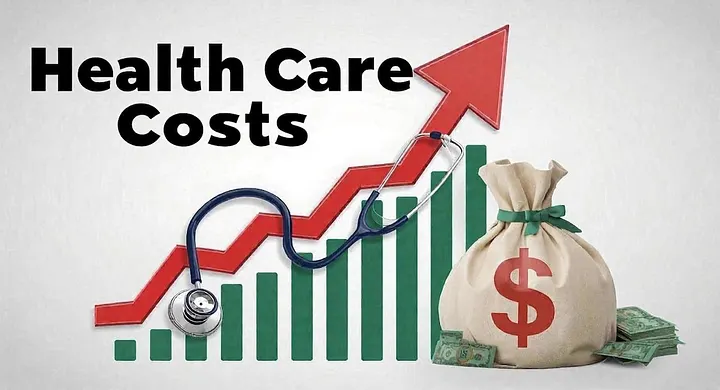
Healthcare costs in America continue to soar. Unfortunately, the Democrats’ answer has been more government spending, more regulation and more promises that somehow healthcare will become affordable.
The numbers are staggering.
According to the Centers for Medicare and Medicaid Services, Americans spent $5.3 trillion on healthcare in 2024, representing 18% of our entire economy. That’s more than $15,000 for every man, woman and child in America.
Meanwhile, the average annual premium for employer-sponsored family health insurance reached nearly $27,000 in 2025, an increase of 53% over the previous decade.
Clearly, something is wrong.
Obamacare Failed to Control Costs
When President Obama promoted the Affordable Care Act in 2010, Americans were promised more affordable healthcare, expanded coverage, and greater financial security.
The law did expand insurance coverage and protect Americans with preexisting medical conditions. Those were meaningful accomplishments.
But it did not solve the fundamental problem of rapidly rising healthcare costs.
Premiums continued climbing. Deductibles remained substantial. And millions of Americans found themselves paying increasingly large amounts for insurance they could barely afford to use.
The problem is that Obamacare focused primarily on expanding insurance coverage and subsidizing premiums rather than increasing the supply of healthcare services.
Subsidizing demand without adequately expanding supply does little to address the underlying cost problem. In fact, when additional spending increases demand faster than available capacity, prices always rise.
That’s basic economics.
Immigration Adds Another Cost Question
Another controversial issue involves healthcare provided to immigrants who cannot afford to pay.
Federal law generally excludes undocumented immigrants from Medicaid, Medicare, and Affordable Care Act coverage. However, hospitals must provide qualifying emergency treatment regardless of immigration status, and some Democrat controlled states finance additional coverage using their own funds.
The broader question is how government should allocate limited healthcare resources while maintaining emergency medical protections. Every dollar spent must ultimately come from taxpayers, insurance premiums or other sources.
That makes transparency and accountability essential.
Socialists Promise Free Healthcare
Now Democratic Socialists advocate expanding government responsibility for healthcare, frequently supporting a Medicare-for-All system.
Their promise is appealing: universal coverage, fewer insurance complications, and little or no payment when patients receive treatment. But healthcare is never free.
Doctors must be paid. Nurses must be paid. Hospitals must purchase equipment, medications, and supplies. Medical facilities must be constructed and maintained.
Those costs don’t disappear simply because government assumes responsibility for paying them. Instead, the financing shifts toward taxes and public budgets.
Supporters argue that eliminating some private insurance administrative expenses and negotiating prices could generate savings. But any possible savings would be more than offset by rapidly rising costs in a government-run system. That’s simply because the government is not motivated by profit and, as a result, has no incentive to lower costs.
And government financing does not automatically increase the number of doctors, nurses, hospitals or available appointments.
If demand rises without a corresponding increase in supply, patients may face longer waits or other restrictions. The fundamental economic problem remains.
Competition Is the Better Approach
Rather than continually expanding government’s role, policymakers should focus on increasing competition and expanding the supply of medical services.
America needs more physicians, nurses, and other healthcare professionals.
That means examining unnecessary barriers, expanding medical education and residency opportunities, and allowing qualified professionals to practice more efficiently.
Greater competition among hospitals, medical practices, and insurers can also put downward pressure on prices.
Consumers should know what procedures cost before receiving treatment. Insurers should compete for customers. Providers should have incentives to improve productivity and deliver better care at lower cost.
Government still has an important responsibility to protect patients, maintain safety standards, and aid those who genuinely cannot afford essential care.
But those responsibilities do not require government to control the entire healthcare system.
For decades, Democrats have promised that additional regulation, subsidies and government programs would make healthcare more affordable. Yet Americans continue paying more. The answer is not another expensive promise from the Democrats.
It is to apply the economic principles that work throughout the rest of our economy: increase supply, encourage competition, improve productivity, and allow consumers greater choice.
Until policymakers address those fundamentals, healthcare costs will continue placing an enormous burden on American families.
Agree/Disagree with the author(s)? Let them know in the comments below and be heard by 10’s of thousands of CDN readers each day!
Content created by Conservative Daily News and some content syndicated through CDN is available for re-publication without charge under the Creative Commons license. Visit our syndication page for details and requirements.