The Raid on Tulsi Gabbard That Wasn’t—Or Was It? A Tense Chapter in the Battle for America’s Secrets

In the spring of 2025, President Donald Trump issued a sweeping executive order demanding the full declassification of files tied to the assassinations of John F. Kennedy, Robert F. Kennedy, and Martin Luther King Jr.—records that had lingered in classified limbo for decades. At the helm of this transparency push was Director of National Intelligence Tulsi Gabbard, the former congresswoman turned top spy chief, who vowed to root out what she called decades of institutional secrecy. “We are actively going out and trying to search out the truth,” Gabbard told Trump and his cabinet in an April 10, 2025, meeting, referring to her team of “hunters” dispatched across intelligence archives.
Her office, the ODNI, took an aggressive stance. In early April 2025, an ODNI-led team— including a Defense Intelligence Agency official on assignment—showed up unannounced at a secret CIA archival warehouse outside Washington. They presented documents asserting ODNI’s legal authority over the records and warned that obstruction could carry consequences. The files were loaded up and transferred to the National Archives for declassification processing. CIA officials were caught off guard, but the agency eventually cooperated under protocols. Later joint releases, such as the Martin Luther King Jr. assassination files in July 2025, were framed as collaborative. CIA Director John Ratcliffe stated at the time: “In partnership with ODNI and FBI, today’s release represents a significant milestone in CIA’s efforts to deliver maximum transparency to the American people.”
Yet beneath the surface, frictions between the CIA and Gabbard’s ODNI never fully eased. Gabbard had slashed ODNI bureaucracy, moved key functions like the President’s Daily Brief out of CIA facilities, and aggressively pursued declassifications that some in the intelligence community viewed as rushed or politically charged. By May 2026, the focus had broadened to include MK-Ultra—the CIA’s Cold War-era mind-control experiments—as well as other historical records Congress had demanded.
Then, on May 13, 2026, the tensions boiled over publicly in dramatic fashion.
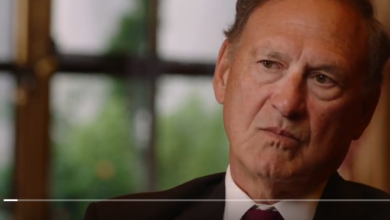
During a Senate Homeland Security Committee hearing, CIA whistleblower and senior officer James Erdman III— who had been detailed to Gabbard’s Director’s Initiatives Group (DIG) to review COVID-19 origins and broader intelligence handling—testified that the agency had reclaimed control of sensitive materials. Specifically, he alleged that when his DIG operations wound down, the CIA “took back 40 boxes of JFK and MK-Ultra files” that Tulsi Gabbard’s team had been actively processing for declassification. The files, according to multiple intelligence community sources and congressional briefings, were under ODNI jurisdiction per the president’s executive order and congressional requests.
The revelation landed like a bombshell.
Rep. Anna Paulina Luna (R-FL), chair of the House Task Force on Declassification, immediately went public. In a statement posted to X, she declared: “The CIA has 24 hours to return the documents to Tulsi Gabbard’s office or else I will make a motion to issue a subpoena. These documents have been requested by Congress.” She added in interviews that the move was “troubling” because it appeared to undermine Trump’s declassification directive, especially with the president traveling abroad at the time. Luna’s team followed up with a formal preservation letter to CIA Director John Ratcliffe, demanding the files—covering JFK assassination records and MK-Ultra materials—be returned to ODNI immediately. “Given the nature of docs in question, we are sending a preservation notice,” she clarified in a follow-up post. “Docs need to be returned to ODNI given that ODNI was given direction and authority by the President to declass RFK, MLK, & JFK.”
Luna framed the incident starkly: “When employees raid the boss’s office… wth is going on?” Some observers speculated it hinted at deeper resistance within the CIA to Gabbard’s reform agenda. The CIA pushed back hard. Agency spokespeople described the hearing as “dishonest political theater” and flatly denied any “raid” on the DNI’s office. A joint clarification from CIA and ODNI channels emphasized ongoing cooperation: the two agencies “have and will continue working hand-in-hand to release and declassify documents of public interest.” No official CIA statement has confirmed or detailed the transfer of the 40 boxes, but whistleblower testimony and Luna’s demands have kept the story alive in real time.For Tulsi Gabbard, the episode underscored the very challenges she has highlighted since taking office. In earlier declassifications of 2016 election-related documents, she stated: “Deep state actors within the Intelligence Community concocted a false narrative… [and] the politicization of the whistleblower process by a former CIA employee… are egregious examples of the deep state playbook on how to weaponize the Intelligence Community.”
Gabbard’s office has not issued a direct on-the-record comment on the May 13 seizure as of late Wednesday night, but the broader mission remains clear: maximum transparency under presidential directive. As of this writing, the 24-hour clock set by Rep. Luna is ticking. Whether the boxes return quietly to ODNI custody, spark a formal subpoena fight in Congress, or fade into the background of inter-agency turf battles remains to be seen. What is certain is that the long shadow of classified history continues to fuel conflict at the highest levels of American intelligence—pitting a reform-minded DNI against an agency long accustomed to guarding its own vaults. In the end, the American people may finally get the unredacted truth they’ve waited decades for—or another chapter in the endless struggle over who controls the secrets.