I do not sleep well, and my day often starts at 2 am. I am actually participating in a sleep study at the University of Utah on the impact of cancer on sleep in patients and survivors. Glad to say I am in the latter group. I tend to do my deepest thinking and most of my writing in the early hours when the quiet is amazing, and the distractions are few. The only sound this morning was the cries of the loons in the distance, a sign of spring in Maine, where I have been living since I had to leave my job after my remission in December. This morning’s thoughts went deep, focusing on Islam and its impact on our culture. I poured my first cup of coffee and had a conversation about the subject with my new associate, Claude. He has opinions on every subject, doesn’t drink coffee, and is very quiet—the perfect morning companion.
There is supposed to be a separation of religion and politics in America. Still, I find them becoming more conflated, and I fear I may have been using some terms incorrectly. I wrote recently about the addition of a prayer room and foot washing station in a high school in Minnesota and referred to it as being built for Muslims. I should have used the term Islam, which is the religion, while Muslim is the person who follows Islam. So a Muslim is to Islam what a Christian is to Christianity, or a Jew is to Judaism. I am not offended by the increase in mosques or the number of followers of Islam in America. Still, I am about the way that the Islamist people who are attracted to these mosques want America to conform to their belief system rather than to assimilate into America’s. An Islamist is someone who believes Islamic principles should govern public and political life — essentially advocating for Islam as a political system, not just a personal faith. Islamism ranges widely, from peaceful democratic movements to, at the extreme end, groups that advocate violence. Some examples of the demands of Islamists are the addition to the school I wrote about, the development of exclusive cities for Islamic people, and the broadcasting of prayer through loudspeakers in some neighborhoods, which imposes on others’ space.
Since 9-11, we have had some concern about groups like Al Qaeda and ISIS that have created cells within America and have been recruiting young men to their cause, which is to destroy America. The Muslims who come to America and worship in these new mosques are not the issue, but the Islamists who are among them and are also attracting our young men may have similar goals as these terrorist groups. We need to separate the two, welcome one, and be very cognizant of the other. The same goes for our government that needs to protect us from the Islamists who want to do us harm, and stop treating the Muslims with special rules or policies not applied to or afforded to the rest of us.
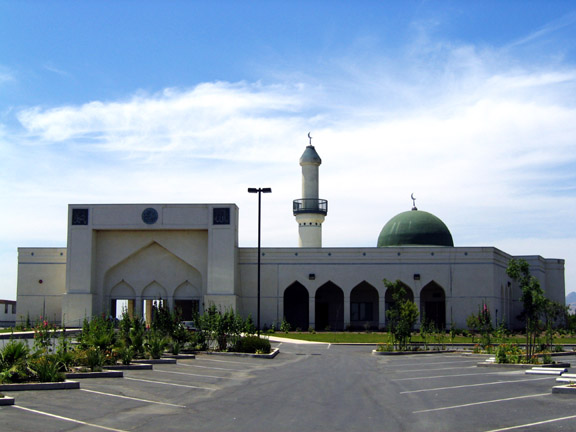
There is an increase in attendance at churches and mosques, not seen in years, which is good for our culture and society as a whole. There is also an increase in the sale of Bibles and Qurans, the #1 and #2 bestselling books worldwide, which is a good thing, especially if young people can read them. But we need to learn the difference between religious and political followers. I learned a lot today from Claude over a couple of cups of coffee and before the sun came up. I hope sharing it with you sheds a little light and understanding on the subject. Enjoy your day in peace.
Content syndicated from Conservative View from New Hampshire with permission
Agree/Disagree with the author(s)? Let them know in the comments below and be heard by 10’s of thousands of CDN readers each day!