Fed’s Bowman Warns of a ‘Large Correction’ in Stocks if AI Bets Fall Short, but Says the Inflation Fight Isn’t Over

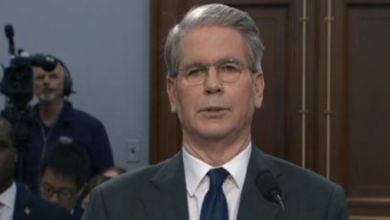
Federal Reserve Vice Chair for Supervision Michelle Bowman warned Tuesday that stocks could face “a large correction in equity valuations” if returns on artificial intelligence investment fall short, according to her prepared remarks.
Bowman, speaking at the Council on Foreign Relations in Washington hours after a hotter-than-expected October consumer price report, listed that and a sharp rise in private longer-term interest rates among the main risks to the economy, Bloomberg Law reported.
“Lower equity prices could undermine the resilience in consumer spending,” she said. “And higher interest rates could further strain interest-rate-sensitive sectors of the economy, like housing and small business investment.”
“AI revenues have been rising quickly but are not yet sufficient to pay for the expense of maintaining existing and developing new AI models and data centers,” she said.
AI-related debt is on track to top $800 billion this year, Bowman said, and lease commitments and residual value guarantees tied to the buildout carry potential payments estimated at more than three times that amount.
Large tech firms with strong credit ratings have taken on off-balance-sheet liabilities so smaller, riskier companies can borrow, and chip designers and hyperscalers have invested in their own customers, “creating the appearance of circular financing.”
Big banks, life insurers, pension funds, private credit and mutual funds all have exposure. Most are well capitalized, but “the complex nature of the financing structures makes it difficult to properly assess counterparty risk.”
She said some reassessment may already be under way, pointing to recent drops in equity valuations, wider corporate bond spreads and higher credit default swap prices for some companies tied to the AI buildout.
‘Still Work to Do’ on Inflation
The warning did not soften her view on prices. “Inflation pressures have persisted for longer than I had hoped and have shown recent signs of broadening,” Bowman said, adding that “there is still work to do to bring inflation closer to 2 percent.”
Core PCE inflation, the Fed’s preferred gauge, likely rose to 3.3% in October, she estimated, with tariffs, energy and AI demand each driving roughly a quarter of the overshoot in the year through September.
Still, she cautioned that financial conditions have tightened and that “the benefit of additional policy tightening has to be carefully weighed against its costs for interest-rate-sensitive sectors.” The Fed held its target range at 3.75% to 4% in October.
Investors are pricing about 90% odds of a quarter-point rate hike at the Fed’s December meeting and a 9% chance of a half-point move, Yahoo Finance reported.
Before that meeting, policymakers will see the October PCE inflation report and the November jobs report, Bowman noted. Unemployment stood at 4.1% in October, with job gains averaging about 80,000 a month this year.
Content created by Conservative Daily News and some content syndicated through CDN is available for re-publication without charge under the Creative Commons license. Visit our syndication page for details and requirements.